

How to Fly with a Ferret?
Are you a ferret owner planning to travel by air? As an exotic pet, ferrets are subject to strict regulations when it comes to air travel. Required documents, acceptance conditions, airlines that accept ferrets on board: discover all our tips for flying with your ferret and organizing your pet’s journey with complete peace of mind.
In a Nutshell
- Ferrets can travel by air in the hold (as checked baggage) or by air cargo, depending on the airline and destination.
- Mandatory documents are required: at a minimum, a health certificate issued by a veterinarian.
- Strict health requirements apply: your ferret must be identified (by microchip or tattoo), vaccinated against rabies, and at least 15 weeks old to be able to travel.
- The cost of transport varies according to several factors: expect around 100€ for hold transport, excluding veterinary fees, transport crate, and any administrative procedures.
Are Ferrets Allowed on Airplanes?
Yes, it is possible to fly with a ferret, but under specific conditions. Unlike dogs and cats, ferrets are classified as exotic pets by most airlines, which subjects them to specific and sometimes more restrictive transport rules.
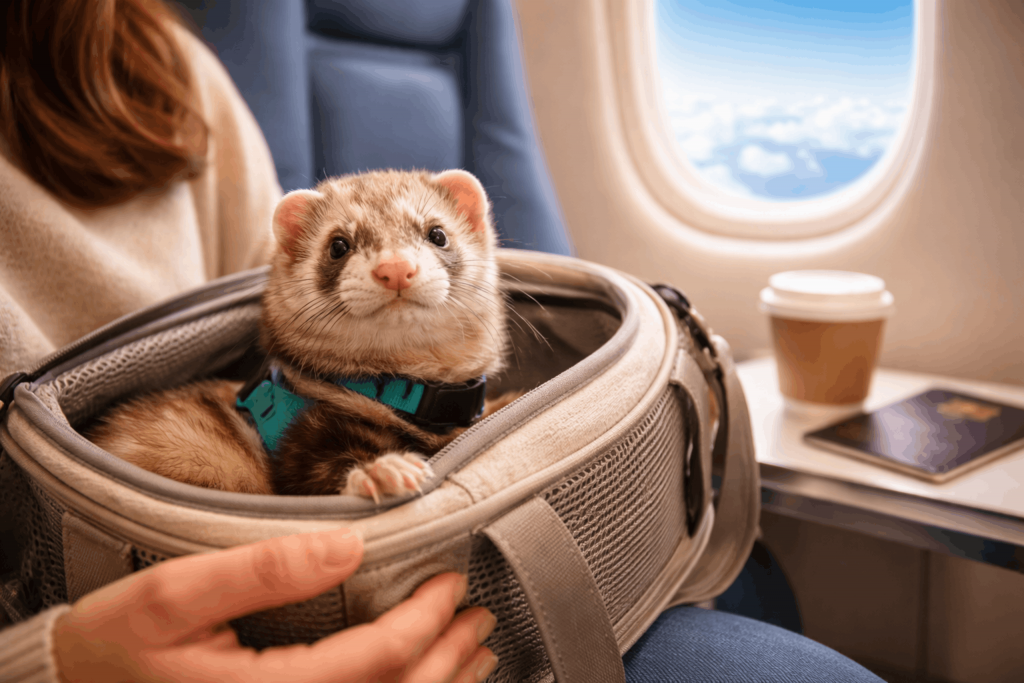
Most carriers do not allow ferrets in the passenger cabin. However, they can be transported in the hold or by air cargo according to each airline’s acceptance conditions. It is therefore essential to contact your carrier before booking your flight, as policies vary considerably depending on the operator and the regulations of your destination country.
Important
Some countries completely refuse the entry of ferrets on their territory (Australia, New Zealand, Hawaii…). Always check with the consulate or embassy of the destination country before any international trip with your ferret to find out the applicable import requirements.
How to Transport Your Ferret by Plane?
There are two main options for flying with ferrets: in the hold or by air cargo. Each has specific transport conditions, advantages and disadvantages that should be compared before booking.
Option 1 – Transport as “Excess Baggage”
In this case, your ferret travels in the hold, under the airline’s responsibility, like a checked baggage. The owner accompanies their pet on the same flight. This is the most common option for flights within the European Union or to certain third countries that accept ferrets.
Hold transport requires an IATA-compliant transport cage, meaning it must be large enough for your ferret to stand up, turn around, and lie down. The cage must be sturdy and well-ventilated. Specific fees are charged in addition to the plane ticket.
Option 2 – Air Cargo Transport
Air cargo is recommended for long international journeys or when the animal cannot travel on the same flight as its owner. In this case, the ferret is entrusted to a carrier specialized in the transport of live animals, who handles all administrative and sanitary formalities.
This option is generally preferred in specific situations such as: moving abroad, itinerary constraints, or destinations served only by airlines for which domestic animals are not accepted in the aircraft cabin or hold.
What Are the Requirements for Flying with a Ferret?
Specific requirements apply when flying with your ferret, regardless of the chosen mode of transport, including:
- Identification: your ferret must be identified by tattoo or pet microchip (ISO 11784/11785), a pet identification device replacing the traditional tattoo, in compliance with European Union requirements and those of many third countries.
- Minimum age: the ferret must generally be at least 15 weeks old b and must have been vaccinated against rabies within the required timeframes.
- Rabies vaccination: rabies vaccination is mandatory in most countries. It must be administered by an accredited veterinarian and recorded in the vaccination record.
- Quarantine: some countries impose quarantine upon arrival. Check the health conditions of the destination country before booking your flight.
- Weight and dimensions: each airline sets its own requirements regarding the maximum permitted weight and the dimensions of the travel cage. Verify this information directly with your carrier.
Important
Regulations vary significantly depending on the airline, the country of departure, and the country of destination. It is therefore essential to check the specific conditions applicable to each flight before making any reservation.
What Documents Do You Need to Travel Abroad with Your Ferret?
To fly with a pet ferret, several documents are essential. Make sure to prepare them well in advance of your departure, as some must be issued within a specific timeframe before the flight:
- An identification record for your ferret
- The health certificate: issued by an accredited veterinarian in the days preceding the flight, this document certifies that the animal is in good health and fit for air travel.
- An import permit: required by certain third countries to authorize the ferret’s entry into the country. To be checked with the embassy or consulate of the destination country.
- The IATA form: some carriers require specific forms when checking in your animal. Check with your airline before booking.
How Much Does It Cost to Fly with a Ferret?
The cost of flying with a ferret varies depending on several factors: the chosen mode of transport, the total weight (animal + cage), the airline, and the destination. Here are the main expenses to expect:
- Hold transport (excess baggage): rates generally range between €50 and €200 depending on the airline and destination.
- Air cargo transport: the cost depends on the total weight, the destination, and the carrier. Expect several hundred euros for an international flight.
- IATA transport cage: budget between €30 and €150 depending on the model and required dimensions.
- Veterinary fees: consultation, health certificate, vaccine updates… budget between €50 and €150.
- Administrative procedures: fees related to import permits or customs formalities may be added depending on the destination country.
For an accurate estimate tailored to your situation, we recommend requesting a personalized quote based on your destination and the services required.
What Are the Airlines Policies for Ferrets?
Airlines’ policies regarding the transport of ferrets vary widely. Here are some examples to guide you:
- Air France: accepts to transport ferrets in the hold on certain flights, subject to specific conditions. Shipping ferrets with Air France Cargo requires the “Specialized Live PLUS” service for priority, secure handling and adapted loading.
- Lufthansa: exotic pets (ferrets, etc.) are generally not explicitly mentioned for the passenger hold (only dogs and cats are) and usually need to go through Lufthansa Cargo.British Airways: usually does not accept ferrets on board.
Low-cost airlines (Ryanair, EasyJet…): rarely accept animals other than dogs and cats, and very rarely exotic pets such as ferrets.
Important
This list is not exhaustive, and carrier policies change regularly. Before making any reservation, contact your airline directly to find out the conditions applicable to your flight and destination.
How to Prepare Your Ferret for Air Travel?
A successful journey starts with careful preparation. Here is some piece of advice to prepare your ferret for air travel:
- Familiarize your ferret with its transport cage: leave it accessible at home several weeks before departure so your pet gets used to it and sees it as a safe space.
- Adjust feeding: avoid feeding your ferret in the hours before the flight to reduce the risk of nausea. Prepare food and water for stopovers or long journeys.
- Avoid tranquilizers and sedatives: they are not recommended, and may even be prohibited, as they can interfere with the animal’s breathing at altitude and worsen stress. We recommend discussing this with your veterinarian and following their recommendations.
- Accessories to bring: a familiar blanket, a toy, or an object bearing your scent can reassure your ferret and reduce its stress during the flight.
- Check the transport cage: make sure it is properly closed, sturdy, and compliant with the dimensions required by the airline. Attach the owner’s contact details in a legible manner on the crate.
- Consult your veterinarian: a health check before the trip allows you to confirm that your ferret is healthy, fit for air travel and to update all necessary documents.
Flying with a Ferret: What You Need to Remember
Flying with a ferret is entirely possible, with careful planning and adherence to regulations. Microchip identification, rabies vaccination, health documents, choice of airline, and mode of transport: each step must be carefully prepared to ensure a smooth journey to your pet. Rules vary depending on carriers and destination countries, which is why it is important to gather information well in advance of your trip.
To simplify all the formalities and be accompanied by animal transport professionals, call on the services of Air Transport Animal. Our specialized team takes care of all the procedures so that your ferret travels in the best possible conditions, wherever you are going in the world.